Daily fantasy sports looks complicated from the outside because the lobby is crowded: dozens of contests, prize pools in six or seven figures, salaries next to every name. Under all of that sits a short set of rules. Learn how to play daily fantasy sports once, at the level of one contest, and every other screen on the site becomes a variation of it. What follows is daily fantasy sports explained from the inside of a single contest outward.
So how does daily fantasy sports work on a real Sunday? This guide uses NFL classic contests on DraftKings as the running example, because their rules are published in full and they are the format most players start with. The same structure applies to basketball, baseball, hockey and golf, with different roster slots and scoring.
How to play daily fantasy sports in five steps
- Pick a slate. A slate is the set of games a contest covers: the Sunday afternoon NFL games, one night of NBA, a single Monday night game. Contests are attached to one slate.
- Pick a contest. The lobby lists head-to-head games, 50/50s, double-ups and tournaments. Each shows the entry fee, the number of entries, the maximum entries per person and a payout table.
- Draft under the cap. Fill every roster slot with real players whose combined salary stays under the cap. On DraftKings NFL classic that is $50,000 for nine players, drawn from at least two different games.
- Manage it until lock. Players lock when their own game starts. Until then you can swap them, which matters when injury news breaks on Sunday morning.
- Watch it score and settle. Points accumulate live from the real box score. When the slate ends, entries are ranked and prizes are paid by the contest's table.
That is the whole loop, and it is daily fantasy sports explained in one paragraph. Everything else, from stacking to ownership projections, is a way of making better decisions inside step three.
How does daily fantasy sports work? The rules explained
Three rules decide almost everything: the salary cap and roster, the scoring table, and the lock. If you know how a site handles each, you know how daily fantasy sports works on that site.
Salary cap and roster slots
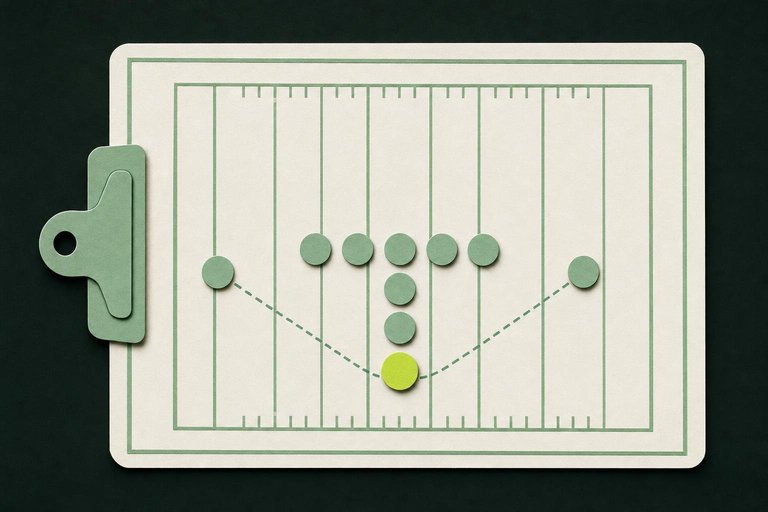
The site gives every player a salary. Stars cost more, backups and role players less. Your lineup has a fixed set of positions, and the total must fit under the cap. The DraftKings NFL classic lineup is one quarterback, two running backs, three wide receivers, one tight end, one FLEX (a running back, receiver or tight end) and one team defense, nine players for $50,000.
The cap is not real money and it does not carry over. Its only job is to make you choose: you cannot roster the five most expensive players on the slate, so you look for cheap players whose role is bigger than their price suggests. That search is most of what DFS players mean when they talk about "value".
Scoring rules
Points come from a published table. In NFL classic contests on DraftKings a quarterback earns a point for every 25 passing yards and 4 for a touchdown pass, loses a point for an interception, and gets a 3-point bonus at 300 yards. Runners and receivers earn a point per 10 yards and 6 per touchdown, with a 3-point bonus at 100 yards. Every reception adds a full point.
FanDuel uses the same yardage and touchdown values and the same bonuses, but pays half a point per reception. That half point is why the two sites can disagree about who the best value at running back is. The DraftKings vs FanDuel comparison lays the tables side by side, including defense scoring.
Lock and late swap
On DraftKings each player locks at the scheduled start of his own game. If your quarterback plays at 1 p.m. and your FLEX plays at 4:25 p.m., the FLEX can still be changed after the early games kick off. FanDuel runs late swap only in contests marked for it with an unlocked padlock icon; in the others, the whole lineup locks at the first game. Read the contest's rules before you assume you can fix a late scratch.
Contest types a beginner will see
The lobby sorts contests by how they pay, and the payout structure should decide your entry far more than the size of the headline prize.
| Contest | Entrants | Who gets paid |
|---|---|---|
| Head-to-head | 2 | The higher score takes the pot, minus the site's fee |
| 50/50 | Small to medium field | About the top half, each paid the same amount |
| Double-up | Small to large field | A bit under half, each paid double the entry fee |
| Triple-up, 10x | Varies | Fewer winners, each paid three or ten times the fee |
| Tournament (GPP) | Hundreds to hundreds of thousands | A minority of the field, with most of the money at the top |
| Single-game (Showdown) | Varies | Any of the above structures, built from one game |
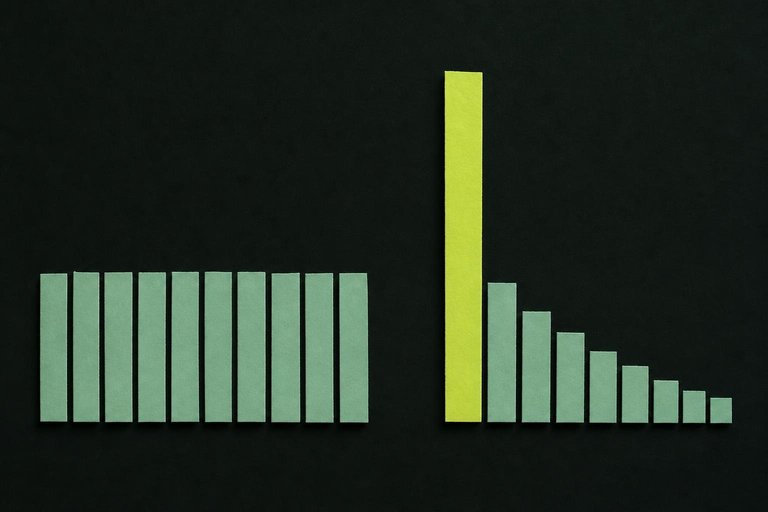
Head-to-head, 50/50 and double-up contests are called cash games because a decent score usually cashes. Tournaments are called GPPs, short for guaranteed prize pool, because the prize money is fixed in advance whether or not the contest fills. For a beginner, the cash games teach faster: you find out each week whether your lineup was above the middle of the field, which is the honest measure of whether you are getting better.
Single-game contests
Showdown on DraftKings and Single Game on FanDuel use one game instead of a slate. You pick six players. On DraftKings one of them is the Captain, whose salary and points are both multiplied by 1.5. On FanDuel the equivalent slot is the MVP, and since 2025 the MVP's salary is also multiplied by 1.5 along with the points. Kickers and both teams' players are eligible, which makes these contests feel very different from a Sunday main slate.
How payouts and fees work
Every contest has a total of entry fees and a prize pool, and the two are not the same number. The difference is the operator's fee, usually called rake. Sites do not publish one rake figure across the board, but you can work it out for any contest from its lobby: multiply the entry fee by the number of entries and compare that with the total prizes listed in the payout table. Doing that once for a 50/50 and once for a large tournament is the quickest way to see what you are paying for.
Payouts are made after the slate is final and stat corrections have been applied. A late stat correction, a reception changed to a rush for example, can move the standings slightly before the contest settles.
Account, age and location rules
Paid contests come with identity and location checks. You need to be of age in the state you are physically in when you enter, not the state where you live. DraftKings sets its minimum at 18 in most states, 19 in Alabama and Nebraska, and 21 in Arizona, Illinois, Iowa, Louisiana, Massachusetts and Virginia, and it does not accept paid entries from Hawaii, Idaho, Montana, Nevada, Oregon or Washington.
Some states also cap how many entries one person can put into a large contest. Delaware's regulations, for instance, limit a player to 3% of the entries or 150 entries, whichever is smaller, in any contest with more than 100 entries; Colorado and Mississippi use the same structure. The lobby shows each contest's own maximum.
The rules keep moving. Illinois set up a licensing framework under its Gaming Board that took effect in July 2026, and Virginia moved fantasy oversight to its Lottery Board the same month. The state-by-state legal guide is kept current with changes like these.
Taxes on what you win
Winnings are taxable income. Operators report net winnings, prizes minus entry fees, on Form 1099-MISC once a player crosses the reporting threshold; for tax years beginning after 2025 the IRS threshold for that box is $2,000. Not receiving a form does not make the income tax-free. How fees and losses can be set against winnings depends on how you file, so this is a question for a tax professional rather than a lobby screen.
Beginner mistakes worth avoiding
Knowing how to play daily fantasy sports is not the same as avoiding its traps. The same handful of errors show up in almost every first season.
- Entering tournaments first. The prize pools are attractive, but a beginner will rarely finish near the top of a large field. Cash games show progress faster.
- Ignoring the payout table. Two contests with the same entry fee can pay very different shares of the field.
- Leaving an inactive player in. Check the final injury reports before each player's game locks.
- Using one site's scoring on the other. Half a point per reception changes who is worth his salary.
- Playing beyond the budget. Set the season's bankroll first and size every entry from it. The strategy guide has a section on how players do that.
One more, which nobody puts on a list: playing the slate you know least because it is the one that happens to be on tonight. Fantasy knowledge is not evenly spread. Most people have one sport they follow closely, and that is where a beginner's first edge, if there is one, will come from.
Questions readers ask
How does daily fantasy sports work?
How does daily fantasy sports work in one sentence? You enter a contest for one slate of games, pick a lineup of real players whose combined salaries fit under the site's cap, and score points from what those players do in their real games. When the last game ends, entries are ranked by points and the contest pays out according to its published payout table.
Is daily fantasy sports hard for a beginner?
Learning how to play daily fantasy sports takes minutes; winning takes longer. The rules are simple, and a beginner can build a valid lineup in a few minutes. Beating a field that includes experienced players with projection tools takes longer, which is why low-cost head-to-head and 50/50 contests are the usual starting point.
How much money do you need to start playing DFS?
Entry fees on the large sites start at very small amounts, often under a dollar for the biggest tournaments, and free contests exist too. The amount that matters is your total budget for the season, set before you play, not the price of a single entry.
What is a salary cap in DFS?
Every player on the slate has a salary set by the site, and your lineup's total must stay at or under the cap. In NFL classic contests on DraftKings the cap is $50,000 for nine roster spots. The cap is play money; it only forces trade-offs between expensive and cheap players.
How are DFS points scored?
Each site publishes a scoring table that converts real statistics into fantasy points: yards, touchdowns, receptions and turnovers in football, points, rebounds and assists in basketball. The tables differ between sites, so the same game can be worth different totals on DraftKings and FanDuel.
What does late swap mean in daily fantasy sports?
Late swap lets you change players whose games have not started yet. On DraftKings each player locks at his own game's start time and unlocked players can still be edited. FanDuel offers late swap only in contests marked with an unlocked padlock icon.
What is the difference between a 50/50 and a GPP?
A 50/50 pays roughly the top half of the field a fixed amount, so you need a solid score, not a great one. A GPP, or tournament, pays a much smaller share of the field with a top-heavy prize ladder, so you need one of the best scores in a large field.
Can you play daily fantasy sports in every state?
No. DraftKings, for example, does not accept paid entries from players located in Hawaii, Idaho, Montana, Nevada, Oregon or Washington, or in Louisiana parishes that did not approve fantasy contests. Several states also restrict pick'em-style games. The state guide has the details.
How old do you have to be to play daily fantasy sports?
18 in most states. DraftKings requires 19 in Alabama and Nebraska and 21 in Arizona, Illinois, Iowa, Louisiana, Massachusetts and Virginia. Sites verify age and identity before paying out.
Do you pay taxes on DFS winnings?
Yes. Winnings are taxable income whether or not you receive a form. Operators report net winnings on Form 1099-MISC once they reach the IRS reporting threshold, which is $2,000 for tax years beginning after 2025. A tax professional can tell you how losses and fees apply to your situation.
What happens if a player in my lineup does not play?
He scores zero unless you swap him out before his game locks. That is the main reason to check injury news and inactive lists shortly before kickoff or tip-off, and the main reason late swap exists.